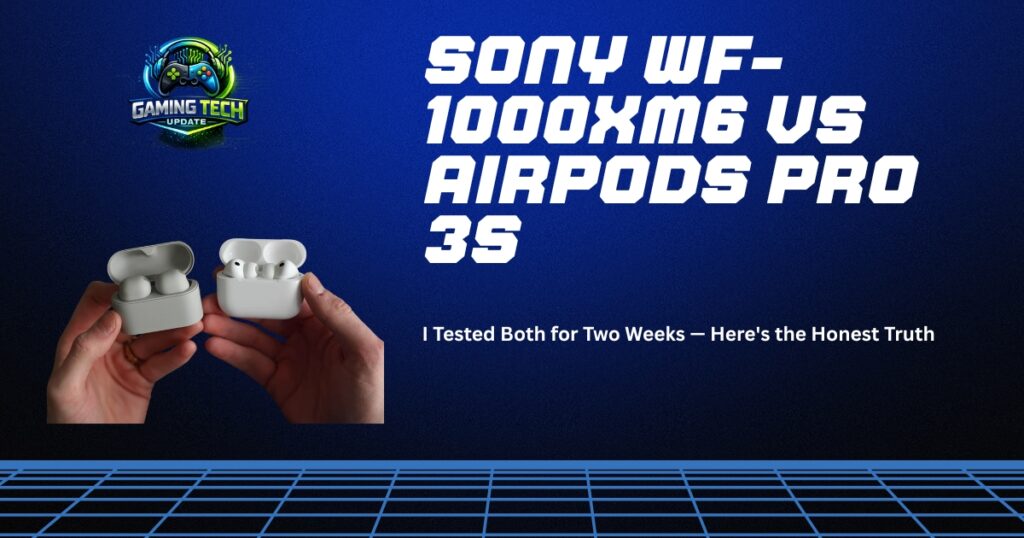
I went into this comparison expecting a clear winner. Apple had already earned serious praise for the AirPods Pro 3, claiming best-in-class active noise cancellation. Then Sony launched the WF-1000XM6 and made the exact same claim. So I spent two weeks rotating between both pairs — on flights, busy streets, morning runs, and even while trying to sleep — to find out which one actually deserves a spot in your ears.
Before anything else: both brands sent me units to test, and neither had any influence over my findings. I genuinely don’t care which one you pick — I just want you to pick the right one.
ANC: Sony Pulls Ahead, But Only Just
Testing ANC isn’t a single number game. I tested across four scenarios: low-frequency noise (jet/bus rumble), high-frequency noise (voices), quiet environment hiss, and wind performance.
For low-frequency blocking, the AirPods Pro 3 held on impressively at 65.5 dB. But the Sony WF-1000XM6 pushed further to 67 dB — a small gap on paper that you can genuinely feel on a plane. For voices and high-frequency sounds, Sony blocked up to 48 dB versus the AirPods’ 43 dB, likely due to Sony’s foam ear tips providing better passive isolation. In quiet environments, both are dead silent — no hissing, no white noise from either. Wind handling was essentially identical: both let through a subtle amount on really gusty days, but nothing dramatic.
| ANC Test | AirPods Pro 3 | Sony WF-1000XM6 | Winner |
|---|---|---|---|
| Low Frequency (Jet/Bus) | 65.5 dB | 67 dB | Sony |
| High Frequency (Voices) | 43 dB | 48 dB | Sony |
| Quiet Environment Hiss | Silent | Silent | Tie |
| Wind Rejection | Subtle | Subtle | Tie |
Transparency Mode: AirPods Feel More Natural
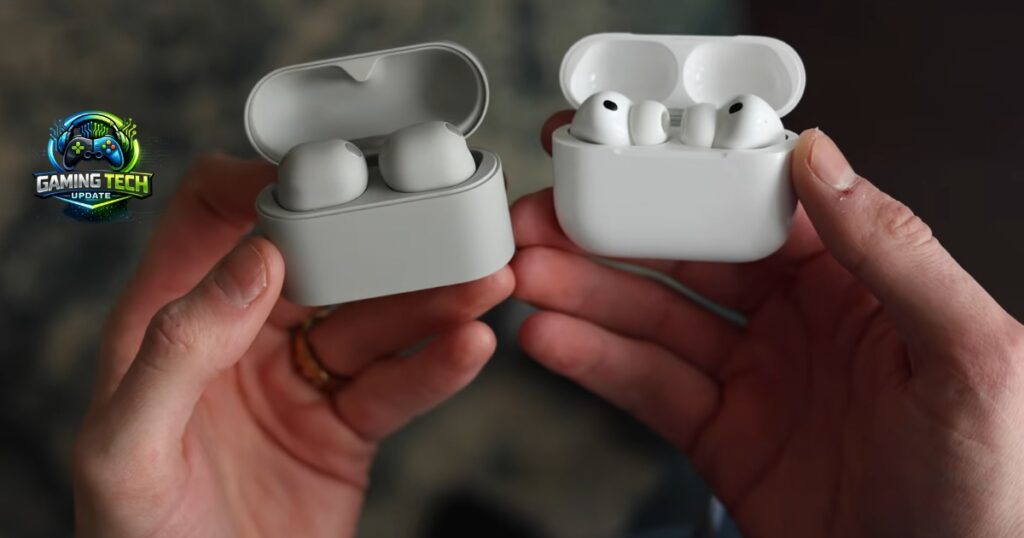
I tested this by wearing one earbud from each brand simultaneously — left ear Sony, right ear AirPods. Both reproduce ambient sound well, but the AirPods feel more open and natural. With the Sony, there’s a slightly closed-off, plugged feeling even in transparency mode, plus marginally more white noise. Sony does offer 20 adjustable ambient sound levels in its app plus a voice-filtering pass-through mode — impressive flexibility. But for raw, forget-they’re-in-your-ears performance, AirPods win here.
Sound Quality: Sony Wins on Flexibility
This is genuinely personal preference territory, so I’ll lay out the differences rather than declare a definitive winner.
| Aspect | AirPods Pro 3 | Sony WF-1000XM6 |
|---|---|---|
| Sound Signature | Neutral, balanced | Warm, V-shaped (bass-forward) |
| High-End Detail | Sharp, sometimes sibilant | Smoother, less fatiguing |
| Equalizer | None | Full EQ in app |
| Codec Support | AAC only | LDAC (hi-res, Android) |
| Best For | Clarity, podcasts, acoustic | Bass-heavy genres, casual listening |
Sony wins this category for me because of the built-in EQ and LDAC support. The AirPods sound great out of the box, but you can’t adjust them at all. That lack of control is a real limitation at $249.
Price, Microphone & Design at a Glance
The AirPods Pro 3 retail at $249 versus Sony’s $329 — that $80 gap matters at this tier, and it’s a clear win for Apple.
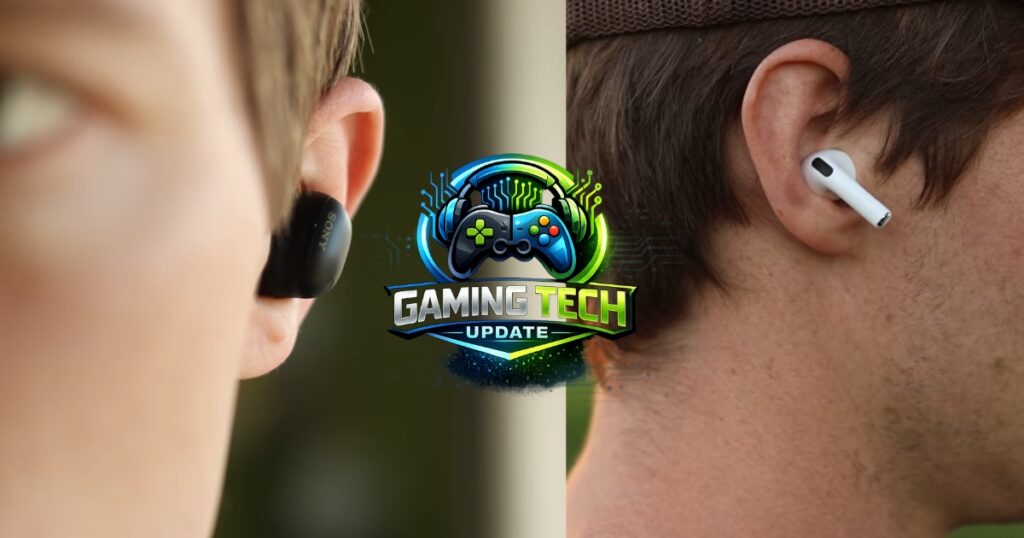
For the microphone test, I wanted real-world outdoor conditions, so I had a friend run the outdoor test for me while I listened back to the recordings. For privacy, I’ve blurred his face in the comparison image, but what matters is what the audio captured. On a busy road with cars passing and light wind, Sony did a noticeably better job filtering out background noise. The AirPods picked up more echo and ambient compression outdoors. Indoors, though, the AirPods sounded more natural and less processed — making them the better call quality choice for offices or quieter environments. It honestly came down to a split: AirPods for indoors, Sony for outdoors.
| Category | AirPods Pro 3 | Sony WF-1000XM6 | Winner |
|---|---|---|---|
| Price | $249 | $329 | AirPods |
| Mic (Indoors) | More natural | Slightly compressed | AirPods |
| Mic (Outdoors) | Some echo | Better noise rejection | Sony |
| Water Resistance | IP57 | IPX4 | AirPods |
| Volume Controls | Pinch + Swipe stem | Tap gestures + Voice | AirPods (marginal) |
| Case Features | Speaker, lanyard hook, MagSafe | USB-C, wireless charging | AirPods |

Fit, Comfort, and the Sleeping Test
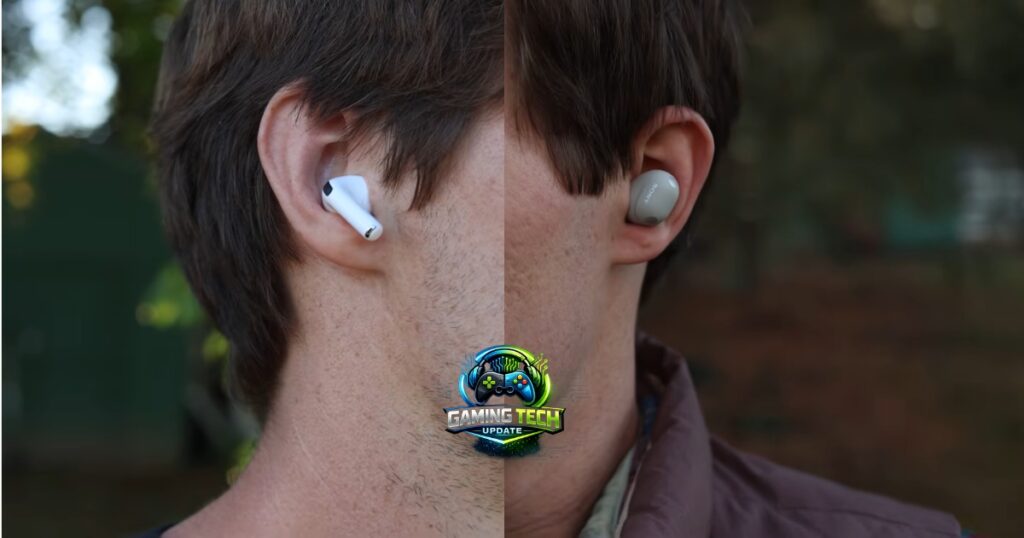
This is where things get genuinely nuanced. The AirPods use silicone-foam hybrid tips — easy to insert, soft, and durable. Sony uses full foam tips that grip your ears more aggressively. Sony wins for stability on runs; those foam tips aren’t going anywhere. But for extended wear, AirPods are more comfortable — less pressure, less heat, less ear fatigue. I’ve also had two Sony foam tips physically break on me, including one mid-flight. If you travel with them, keep spares.
For sleeping, AirPods are the better choice. They run cooler, allow more airflow, and don’t create that expanding pressure sensation. Neither is ideal for side-sleeping specifically, but AirPods are more tolerable for longer overnight use.
Features: AirPods Win on What Matters Most
Sony has more features overall — low-latency gaming audio, true multipoint device switching (works across any devices, not just Apple), ear-scanning personalization, background music room mode, Quick Listen hold gesture, and voice commands. It’s a packed app. But AirPods have two category-defining features that Sony simply can’t match: a clinically accurate hearing aid mode for mild-to-moderate hearing loss, and a genuinely accurate heart rate sensor. Those aren’t gimmicks — they can meaningfully improve someone’s daily life. Add seamless Apple ecosystem switching, Find My precision tracking, and MagSafe charging, and AirPods edge ahead on features despite having fewer of them.
Final Verdict
After two weeks, the final score sits at Sony 8, AirPods 7 — genuinely close.
| Category | Winner |
|---|---|
| ANC (Low & High Frequency) | Sony |
| Transparency Mode | AirPods |
| Sound Quality / Flexibility | Sony |
| Price | AirPods |
| Microphone Indoors | AirPods |
| Microphone Outdoors | Sony |
| Water Resistance | AirPods |
| Fit / Stability | Sony |
| Comfort / Sleep Use | AirPods |
| Features | AirPods |
| Battery & Charging | AirPods (MagSafe edge) |
| Overall Score | Sony 8 — AirPods 7 |
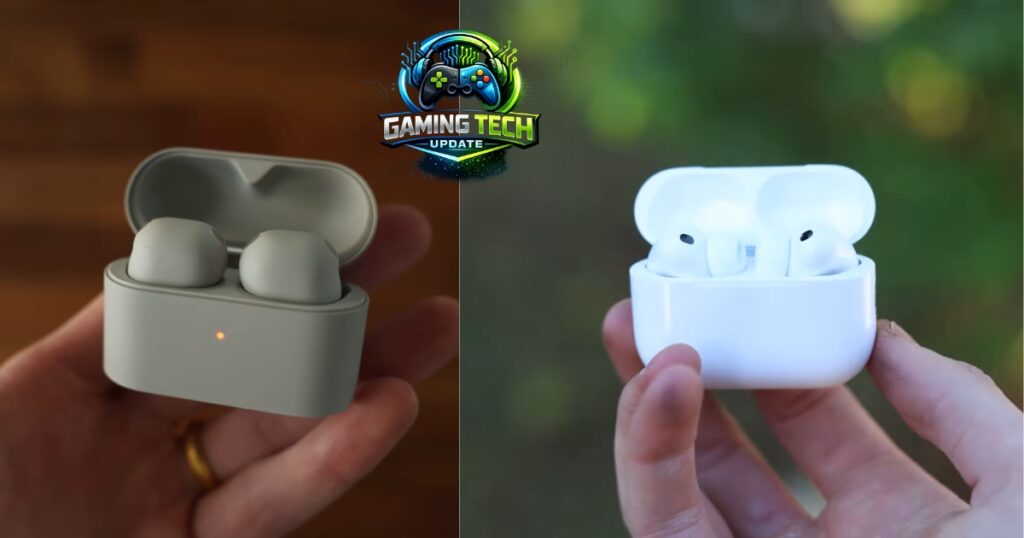
My honest recommendation: if you want the best noise cancellation, full sound customization, and cross-platform device switching, go Sony. If you’re in the Apple ecosystem, value comfort, or could genuinely use hearing aid functionality, AirPods Pro 3 are worth every penny of the $80 savings.